What's in a name?
Elspeth Dugdale | October 30, 2024
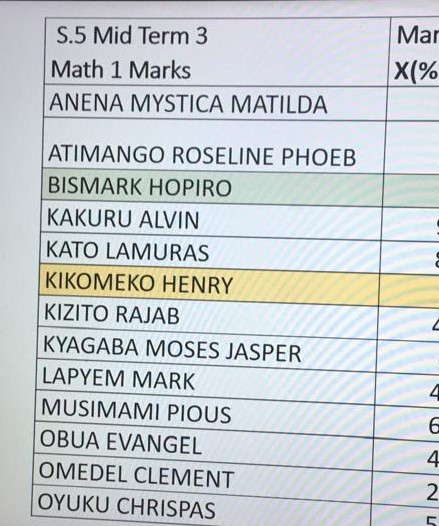
Reading out the class register is an interesting minefield that needs careful navigation. Even for a novice with a mere 15 years' experience, registers still need careful handling to avoid ridicule, causing outright offence, not to mention class hysteria combined teacher humiliation, unless you're extremely thick skinned.
It's not just a question of teacher dignity, because with some classes reaching 100 students, it can take a long time to read out the register, as some students are officially listed with three official names. So, with up to 300 separate names to read out loud, it's just as well that all lessons last 80 minutes.
So what is in a name?
Firstly, there are the 'grandparent' names: Joyces, Mabels/Mables, Humphreys, Brendas, Irenes, Winnifrids/Winnies, Monicas Moureens/Maureens, Herberts, Franks and Alfreds.
Then there's a Bible Hero or two: Philemon, Gabriel, Abel, Methuselah, Esther, Mephibosheth (pronounced here as Meffy-bosh-eth), Joshua,
Some names are more memorable than others: Mirembe (peace) Desire, Precious, Innocent, Evangel, Trinity, Elvis, Blessing, Lucky, not forgetting Obama Barak in S3.
And, of course, each one needs correct spelling: Mystica, Mitchael, Bremble, Phoeb & Phiebe, Janipher, Sinderella, Marjorine, Slyvia, Pious & Suzan.
Full names in Uganda may denote your home place, your sibling status, honour ancestors, describe a characteristic or even shape destiny, influence character, and predict future outcomes. Most of all they make reference to your tribe and clan. Naming a baby takes serious time - it doesn't happen immediately at birth.
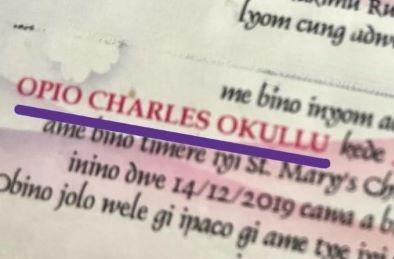
For example, Charles' full name of 'Opio Okullu Charles' denotes where he is from in the north and the fact he was the first twin. Interestingly Kato Patrick (WTA Bursar and Charles' most trusted friend), is the second born twin in his family, but his name hails from the central region.
Our names are in daily use; we are known by our names - both formal and informal. Labels, on the other hand can be different & dangerous matter. WTA students may be from low income families, they may be 'in need' in some respects. However, the students themselves would both reject and be bemused by labels such as 'sad', 'victim', 'hopeless', 'poor', 'refugee', 'desperate', or that 'they' are young people that 'we' should be 'sorry for'. Nothing could and should be further from the truth.
Of course, poverty has the ability to make someone behave desperately, thoughtlessly, recklessly or dangerously. Poverty can be grinding and seemingly relentless. WTA abounds with stories that start like that. However, the stories change with time, with education and opportunity.
Seeing WTA students in action, going about their daily life at school bring to mind words like 'feisty', 'fun', 'hopeful','determined','sociable' 'resilient' & 'focussed'. Fortunately they are not angelic - 758 teenagers and young adults on site may also be stroppy, fussy, idle, distracted, infuriating, disorganised & deluded. Not to mention extremely noisy. Reassuringly normal. Reassuringly normal despite trauma, sickness, pain, difficulty, poor parenting and disappointment.
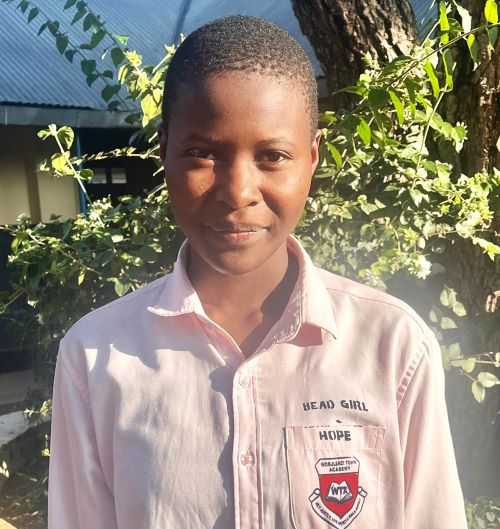
What's in a name? The S6 Headgirl is Asio (simple/beautiful/caring/forgiving) Hope. Great name and even a great label. And hopefully a great future.